The Cloisters

Medieval European art and architecture housed in a museum at the northern tip of Manhattan — tapestries, illuminated manuscripts, sculpture, and stained glass from the 9th–15th centuries.

The Cloisters hero image

Medieval architecture, devotion, and sacred craft on the Hudson.

ocated in northern Manhattan's Fort Tryon Park, The Cloisters integrates architectural elements from five medieval French and Spanish monastic sites into a purpose-built museum complex. Designed to recreate the acoustics, domestic gardens, and filtered light of medieval Europe, it contextualizes sacred art within its native architectural setting.

The collection includes monumental Romanesque stone carving, delicate stained glass, carved boxwood miniatures, and the famed Unicorn Tapestries. Far from the stark display of modern galleries, these works are shown as they were meant to be encountered: amid stone courtyards, cloistered walkways, and sacred enclosure.
Highlights

The Unicorn Rests in a Garden (from the Unicorn Tapestries)

The Unicorn Rests in a Garden (from the Unicorn Tapestries)

1495–1505

Wool warp with wool, silk, silver, and gilt wefts
The Unicorn Purifies Water (from the Unicorn Tapestries)

The Unicorn Purifies Water (from the Unicorn Tapestries)

1495–1505

Wool warp with wool, silk, silver, and gilt wefts
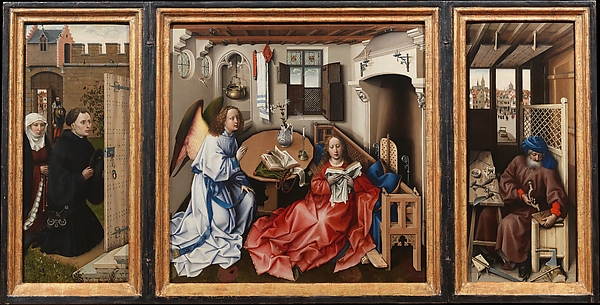
Annunciation Triptych (Merode Altarpiece)

Annunciation Triptych (Merode Altarpiece)

Robert Campin · ca. 1427–32

Oil on oak
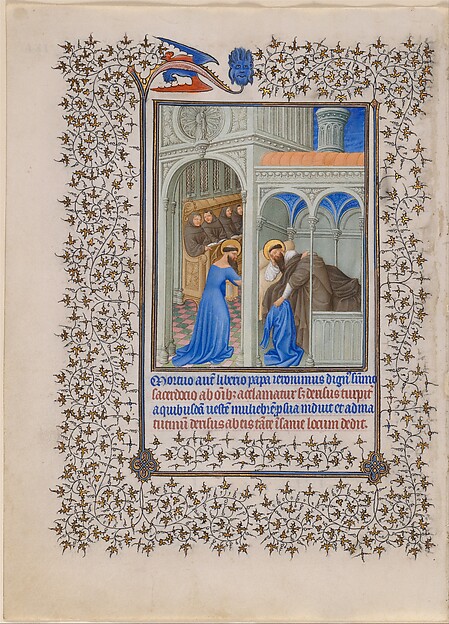
The Belles Heures of Jean de France, duc de Berry

The Belles Heures of Jean de France, duc de Berry

The Limbourg Brothers · 1405–1408/1409

Tempera, gold, and ink on vellum
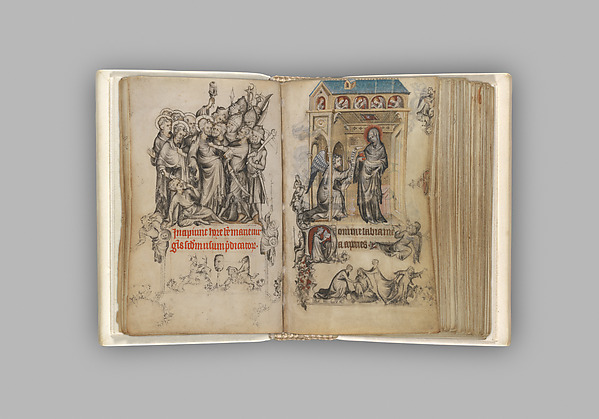
The Hours of Jeanne d'Evreux, Queen of France

The Hours of Jeanne d'Evreux, Queen of France

Jean Pucelle · ca. 1324–28

Grisaille, tempera, and ink on vellum
The Cloisters Cross

The Cloisters Cross

ca. 1150–60

Walrus ivory

Themes

A Monastery Rebuilt Stone by Stone
The Unicorn and the Medieval Image
Books of Hours and Holy Objects